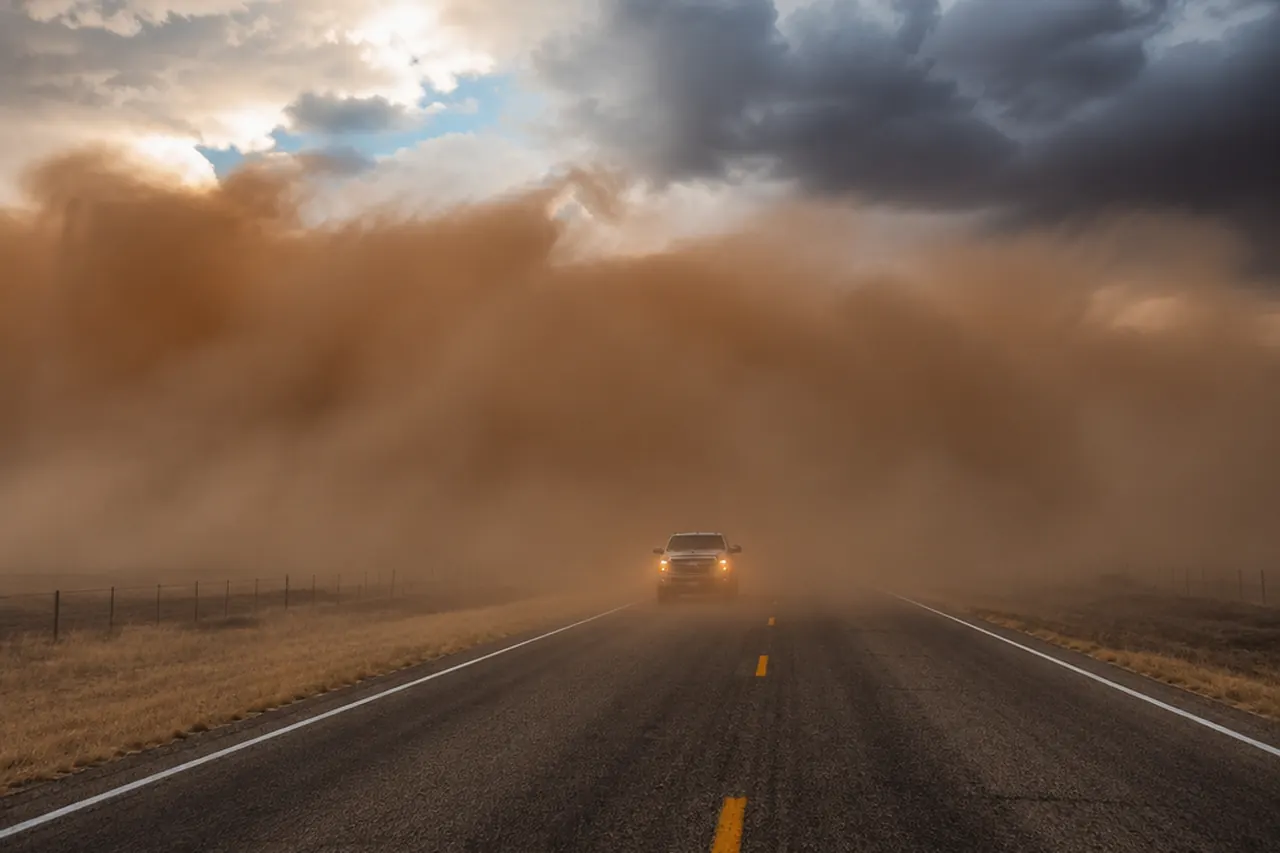
Blowing dust
Strong winds can lift dust across Panhandle highways, dropping visibility from miles to nearly nothing in moments. Chain-reaction crashes happen when drivers keep their speed into a dust cloud.
- If you see dust ahead, slow down before you reach it — don't drive into it at highway speed.
- Turn on headlights; avoid stopping in a travel lane.
- If visibility is near zero, pull fully off the road where it's safe, turn off your lights so others don't follow you, set the brake and keep your foot off the brake pedal.
High wind
Crosswinds push high-profile vehicles — semis, empty trailers, RVs, pickups with campers — across lane lines, especially on open stretches of I-40, I-27 and US-287.
- Give trucks extra room and don't linger beside them.
- Keep both hands on the wheel and expect gusts at overpasses and gaps between buildings.
Ice and snow
Bridges and overpasses freeze first. Black ice is hard to see, and Panhandle winter storms can arrive quickly and close the interstates.
- Slow down well below the limit, double your following distance, and brake gently.
- Check TxDOT's road conditions before a winter trip.
Who's at fault in a bad-weather crash?
Texas law requires drivers to drive at a speed that's reasonable and prudent for the conditions and to keep a safe following distance (Transportation Code ch. 545). Bad weather doesn't suspend those duties — it heightens them. A driver who rear-ends you in a dust cloud or slides into you on ice because they were going too fast is usually still at fault. Defenses like "sudden emergency" or "unavoidable accident" exist, but they don't apply when the driver's own speed or inattention made the danger worse.
In multi-vehicle pileups, Texas divides responsibility among every driver whose conduct contributed. More on I-40 pileups →
Sources
- Tex. Transp. Code ch. 545 (operation and movement of vehicles)
- Tex. Civ. Prac. & Rem. Code ch. 33 (proportionate responsibility)
Statutes are linked to the official Texas Legislature site. Laws change; this page reflects them as of the date above.